
Best Marketing Platforms for Local Service Businesses
From Google Ads to lead marketplaces, the best marketing platforms for local service businesses ranked by ROI.
If you run a local service business, you already know that generic marketing advice doesn't apply to you. You don't sell products online. You don't ship nationwide. You need customers within a 30-mile radius who need their plumbing fixed, their lawn mowed, or their roof repaired this week.
The best marketing platforms for local service businesses combine affordability with hyper-local targeting. This guide ranks the top 9 platforms updated for 2026, covering both digital and traditional options that actually work for contractors, cleaners, landscapers, and other home service professionals. Several platforms now let you start free with no upfront cost.
Recommended Video
Quick Comparison Table
| Platform | Monthly Cost | Best Channel | Learning Curve | Best For |
|---|---|---|---|---|
| Nearleap | Free to start, $99-$499/mo | Lead generation | Low | Dedicated verified leads |
| Google Ads | $300-$2,000+/mo | Search/display | High | High-intent searchers |
| Google LSA | $5-$100/lead | Search | Medium | Licensed/insured trades |
| Facebook/Instagram Ads | $150-$1,000+/mo | Social | Medium | Brand awareness + leads |
| Nextdoor | Free-$100/mo | Neighborhood | Low | Residential services |
| Yelp Ads | $150-$500/mo | Reviews/search | Low | Urban service areas |
| Direct Mail (EDDM) | $200-$1,000/campaign | Physical mail | Low | Targeted neighborhoods |
| Email Marketing | $0-$50/mo | Medium | Past customer retention | |
| YouTube | $100-$500/mo | Video | High | Trust building |
#1. Nearleap
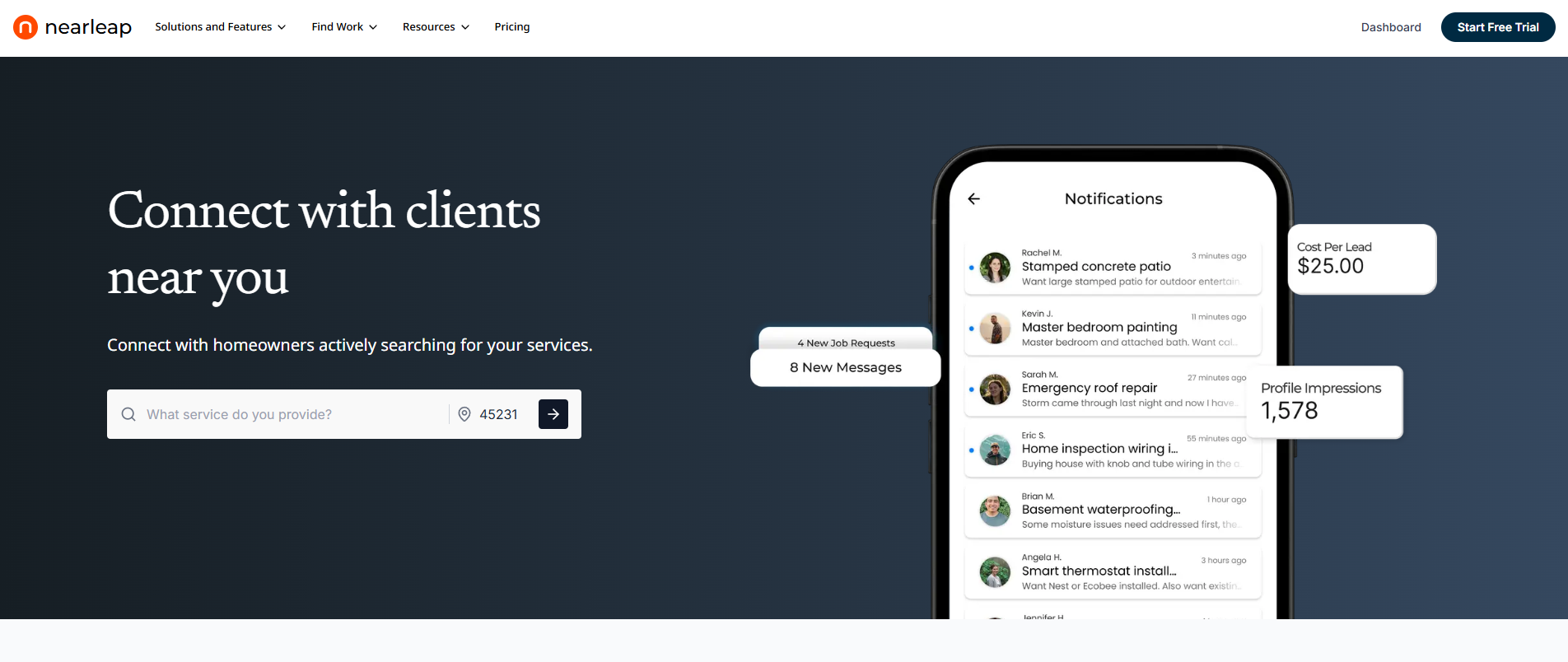
Most marketing platforms require you to create ads, manage campaigns, and hope that clicks turn into customers. Nearleap skips all of that by delivering verified, dedicated leads directly to you. For local service businesses that want customers without becoming marketing experts, this approach saves both time and money. You can create a free profile and preview leads in your area before subscribing. No credit card required.
Every lead is phone-verified through Twilio, which eliminates the spam, fake inquiries, and wrong-number leads that plague other platforms. Each lead goes to one service provider only, so you never find yourself in a race against four competitors to return a call.
Why it works for local service businesses:
- Free to start, no marketing expertise needed. Create a profile and preview leads with no commitment. Set your service area and job types, and Nearleap handles customer acquisition for you. No ad copy, no keyword research, no campaign optimization.
- Three tiers to match your growth stage. Pro at $99/mo (10 leads, $20/extra, $20/booking) for solo operators just starting out. Business at $249/mo (unlimited leads, $15/booking) for growing companies. Enterprise at $499/mo (unlimited leads, $10/booking) for established businesses scaling up.
- CRM with pipeline management. A kanban-style board tracks every lead through your sales process. Add notes, move leads through stages, and never lose track of a potential customer.
- Instant booking page. Your public booking URL lets customers schedule appointments 24/7. Flat booking fees ($10-$20) replace bidding wars. This converts website visitors and social media followers into booked jobs without phone tag.
- Lead decline-to-opportunity system. If a lead doesn't match your criteria, decline it. The lead becomes available to another contractor, and you don't waste time or money on jobs you don't want.
- Auto-response system (Enterprise). Automated messages go out instantly when a new lead arrives. Speed to contact is the number one factor in winning local service jobs, and auto-responses give you a permanent advantage.
- Client management. Profiles are automatically created as you work leads, building a customer database for repeat business and referral marketing.
Start with the free profile to see how many leads Nearleap can deliver in your market, then use the 7-day free trial to test. For service businesses that want to stop managing ads and start managing jobs, this is the most efficient marketing platform available.
Pros:
- Free profile with lead previews before paying
- Unlimited lead plans available for scaling
- Dedicated leads eliminate competition for each customer
- Verified contacts mean real people with real projects
- All-in-one platform replaces separate CRM and booking tools
- Predictable monthly cost with no surprise charges
Cons:
- Subscription required for full lead access (free preview available)
- Market coverage expanding but not yet nationwide
- Higher tiers needed for CRM automation features
#2. Google Ads (Search)
Google Ads puts your business in front of people actively searching for your services. When someone types "emergency plumber near me" or "house painters in Phoenix," your ad can appear above all organic results. This high-intent traffic converts well because the customer is looking for help right now.
The challenge is cost. Home service keywords are expensive, often $5-$50 per click depending on your trade and market. Without careful management, you can burn through $1,000+ per month with mediocre results. Most successful local service businesses either learn Google Ads management themselves or hire a specialist.
Pros:
- Reaches customers at the moment they're searching
- Precise geographic and keyword targeting
- Measurable results with conversion tracking
- Scales up or down based on capacity
Cons:
- Expensive per click for competitive trades
- Steep learning curve to manage effectively
- Requires ongoing optimization and monitoring
- Click fraud can waste budget
#3. Google Local Services Ads (LSA)
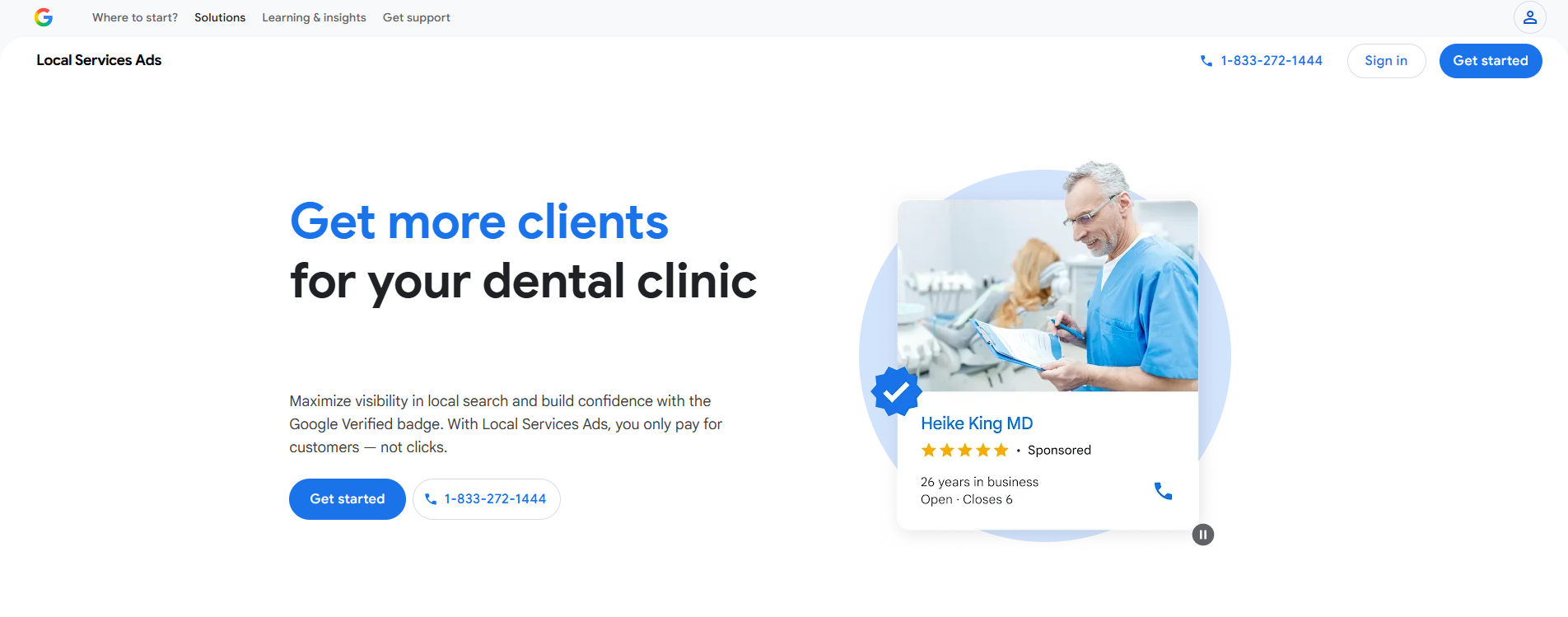
Google LSA is a separate product from Google Ads, designed specifically for local service businesses. Instead of paying per click, you pay per lead. Your ad appears at the very top of search results with a "Google Guaranteed" badge that builds instant trust.
Setup requires a background check and license/insurance verification, which takes 2-4 weeks. Once approved, you set a weekly budget and Google sends leads as phone calls or messages. The Google Guaranteed badge means Google will reimburse customers up to $2,000 if they're unsatisfied, which makes homeowners more comfortable hiring you.
Pros:
- Top placement above all other ads
- Pay per lead, not per click
- Google Guaranteed badge is a powerful trust signal
- Lower management burden than Google Ads
Cons:
- Verification process takes weeks
- Limited control over targeting and messaging
- Lead costs can be high in competitive markets
- Not available for all service categories
#4. Facebook and Instagram Ads
Facebook and Instagram ads excel at two things for local service businesses: brand awareness and lead generation. Unlike Google Ads where customers are actively searching, social ads interrupt people while they're scrolling. This means you need compelling visuals and offers to capture attention.
Before/after project photos perform exceptionally well for contractors. A kitchen remodel transformation, a manicured lawn, or a freshly painted house stops the scroll. Lead form ads that let customers request quotes without leaving Facebook typically cost $5-$20 per lead for local services.
Pros:
- Visual format showcases your work beautifully
- Detailed targeting by location, demographics, and interests
- Lead form ads reduce friction in the customer journey
- Affordable entry point starting at $5/day
Cons:
- Lower intent than search-based platforms
- Requires strong visuals to be effective
- Algorithm changes affect ad performance
- Lead quality can be inconsistent
#5. Nextdoor
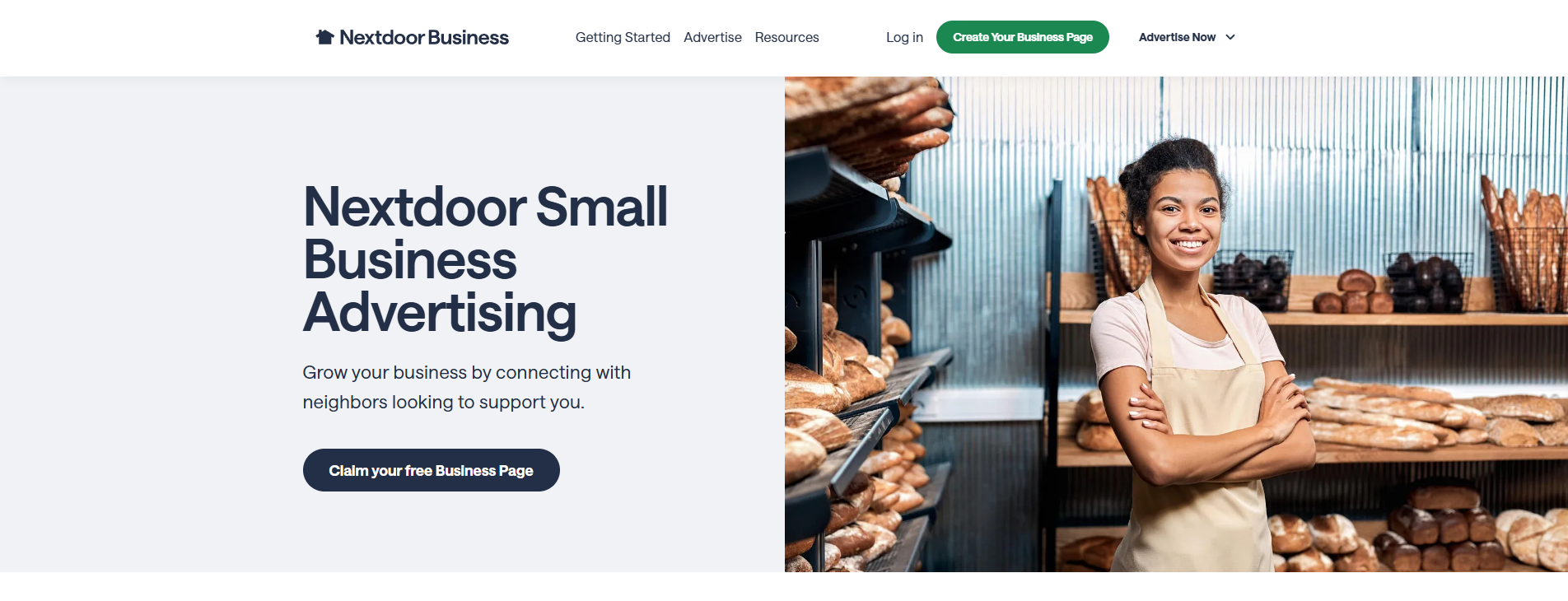
Nextdoor is the neighborhood platform that 1 in 3 US households actively uses. For local service businesses, this hyper-local audience is incredibly valuable. Neighbors recommend contractors to each other, creating a digital word-of-mouth effect that's hard to replicate elsewhere.
A free business page lets you appear in neighborhood searches and collect recommendations. Sponsored posts and local deals extend your reach to nearby neighborhoods for as little as $2/day. The platform's intimate, community-focused environment means recommendations carry more weight than anonymous online reviews.
Pros:
- Hyper-local audience of verified neighbors
- Community recommendations build strong trust
- Free organic visibility through business pages
- Very affordable paid advertising options
Cons:
- Audience limited to residential homeowners
- Organic reach requires consistent engagement
- Smaller overall audience than Google or Facebook
- Activity levels vary significantly by neighborhood
Recommended Video
#6. Yelp Ads
Yelp is still where millions of consumers go to find and evaluate local service providers. A strong free profile with positive reviews generates organic leads, and paid advertising puts you in front of customers searching for your specific trade.
Yelp's advertising starts at about $5/day, but effective campaigns typically require $150-$500/month. The platform's strength is in urban and suburban markets where consumers actively compare reviews before hiring. If you're in a rural area, Yelp's impact diminishes significantly.
Pros:
- Strong consumer trust in review-based platform
- High-intent local searches for services
- Free profile with organic lead potential
- Request-a-Quote feature for direct lead capture
Cons:
- Review filter removes some legitimate positive reviews
- Persistent sales calls from Yelp representatives
- Advertising costs can be high for competitive categories
- Negative reviews are difficult to remove or respond to
#7. Direct Mail (EDDM)
Every Door Direct Mail through USPS lets you send postcards or flyers to every household in selected mail routes for as little as $0.20 per piece. For local service businesses, this means reaching 500-5,000 homes in your target neighborhoods for $100-$1,000 per campaign.
The key to direct mail success is targeting and repetition. Focus on neighborhoods with homes in your ideal age range (10-25 years old for renovation contractors, newer builds for maintenance services). Send at least 3 mailings to the same routes, because response rates increase significantly with repeated exposure.
Pros:
- Reaches every household in targeted neighborhoods
- No digital skills required
- Physical mail stands out in a digital-first world
- EDDM pricing is very affordable per piece
Cons:
- Typical response rate is 1-3%
- Requires repetition for best results
- Design and printing add to costs
- Difficult to track exact ROI
#8. Email Marketing
Email marketing is the most cost-effective platform for staying in touch with past customers and generating repeat business. Tools like Mailchimp (free for up to 500 contacts) or Constant Contact ($12/month) let you send seasonal reminders, maintenance tips, and special offers.
For service businesses, the magic is in timing. An HVAC company that emails customers about fall furnace tune-ups in September generates easy bookings. A landscaper who sends spring cleanup reminders in March fills their schedule weeks in advance. The key is building your email list from day one by collecting every customer's email address.
Pros:
- Extremely low cost (often free for small lists)
- Direct communication with past customers
- Seasonal campaigns drive repeat business
- Highest ROI of any marketing channel for retention
Cons:
- Requires building an email list first
- Not effective for acquiring new customers
- Requires consistent content creation
- Deliverability can be an issue without proper setup
#9. YouTube
YouTube is the second-largest search engine, and homeowners regularly watch how-to and behind-the-scenes videos before hiring contractors. A local electrician who posts "How to Tell If Your Circuit Breaker Needs Replacing" builds trust and demonstrates expertise in a way no other platform can match.
Creating videos doesn't require professional equipment. A smartphone, basic editing, and authentic expertise are enough. YouTube ads targeting local searches cost $0.10-$0.30 per view, making them surprisingly affordable for building brand awareness in your service area.
Pros:
- Builds trust and authority through expertise demonstration
- Videos rank in Google search results for bonus visibility
- Content works for you 24/7 once published
- Affordable ad platform for local targeting
Cons:
- Time-intensive to create quality content
- Results build slowly over months
- On-camera presence requires comfort and practice
- Production quality expectations continue to rise
How We Ranked These
We ranked these platforms based on their effectiveness specifically for local service businesses with budgets under $1,000/month. Each platform was evaluated on cost per customer acquired, time investment required, ease of use for non-marketers, and proven results for trades and home services.
Platforms that generate leads without requiring marketing expertise ranked higher, since most service business owners are technicians first and marketers second. We also considered how well each platform performs for businesses with limited or no online review history, since newer companies need viable options too. Free entry points scored a bonus.
All pricing reflects March 2026 data and may vary by trade and location.
Frequently Asked Questions
How much should a local service business spend on marketing?
Industry benchmarks suggest 5-10% of revenue for established businesses and 10-15% for businesses in growth mode. For a service business generating $15,000/month in revenue, that means $750-$2,250/month across all marketing channels. Start at the lower end with one or two platforms, measure your cost per customer, and increase spending on channels that deliver positive ROI.
What's the best free marketing for a local service business?
Google Business Profile is the single most impactful free marketing tool for any local service business. It puts you in Google Maps and local search results, and collecting reviews makes you more visible over time. Combine it with Nextdoor (free business page) and Nearleap (free profile with lead previews) for a solid free marketing foundation. These three platforms together can generate consistent leads without spending a dollar.
Should I hire a marketing agency or do it myself?
For platforms like Nearleap (free to start), Nextdoor, and email marketing, you can manage them yourself in under 2 hours per week. Google Ads and Facebook Ads have steeper learning curves, and a poorly managed campaign wastes more money than an agency's fees would cost. If your marketing budget exceeds $1,500/month across paid channels, an agency or freelance specialist typically improves ROI enough to justify their cost.
Which marketing platform has the best ROI for contractors?
Based on our analysis, dedicated lead platforms like Nearleap deliver the highest ROI because every lead is yours alone, which dramatically improves conversion rates. Unlimited lead plans make scaling affordable. Google Business Profile has effectively infinite ROI since it's free. Among paid advertising, Google LSA typically outperforms Google Ads for local services because you pay per lead rather than per click. The worst ROI we consistently see is from Yelp advertising in less populated areas.
Related reading: