
Top 10 Websites to Find Customers for Your Trade
The best websites where service professionals find new customers. Compare lead quality, cost, and competition on each platform.
Every tradesperson needs a reliable stream of customers, but figuring out which websites actually deliver paying clients is frustrating. There are dozens of platforms claiming to connect you with homeowners, and most of them waste your time and money. The best platforms in 2026 let you start free and evaluate lead quality before committing.
We've tested the top 10 websites where electricians, plumbers, HVAC techs, roofers, and other tradespeople can find real customers in 2026. This ranking is based on lead quality, cost per customer acquired, and how well each platform works for skilled trades specifically.
Quick Comparison Table
| Website | Cost Model | Typical Cost/Lead | Lead Type | Best For |
|---|---|---|---|---|
| Nearleap | Free to start, monthly subscription | From $20/lead | Dedicated (1 pro) | All trades |
| Thumbtack | Per lead | $15-$100+ | Shared (2-5) | Small/medium jobs |
| Google LSA | Per lead | $5-$100+ | Not shared | Licensed trades |
| Angi | Per lead | $15-$300 | Shared | Larger projects |
| Bark | Credits | $5-$30/lead | Shared (5+) | Diverse services |
| Yelp | Monthly ads | $5-$15/day min | Organic + paid | Urban markets |
| Nextdoor | Free + ads | Free-$2/day | Organic | Residential |
| Facebook Marketplace | Free + ads | Free-$20/lead | Organic + paid | Local services |
| Houzz | Subscription | $300-$1,000+/mo | Organic | Remodeling/design |
| Porch | Per lead | $10-$150 | Shared | Home improvement |
#1. Nearleap
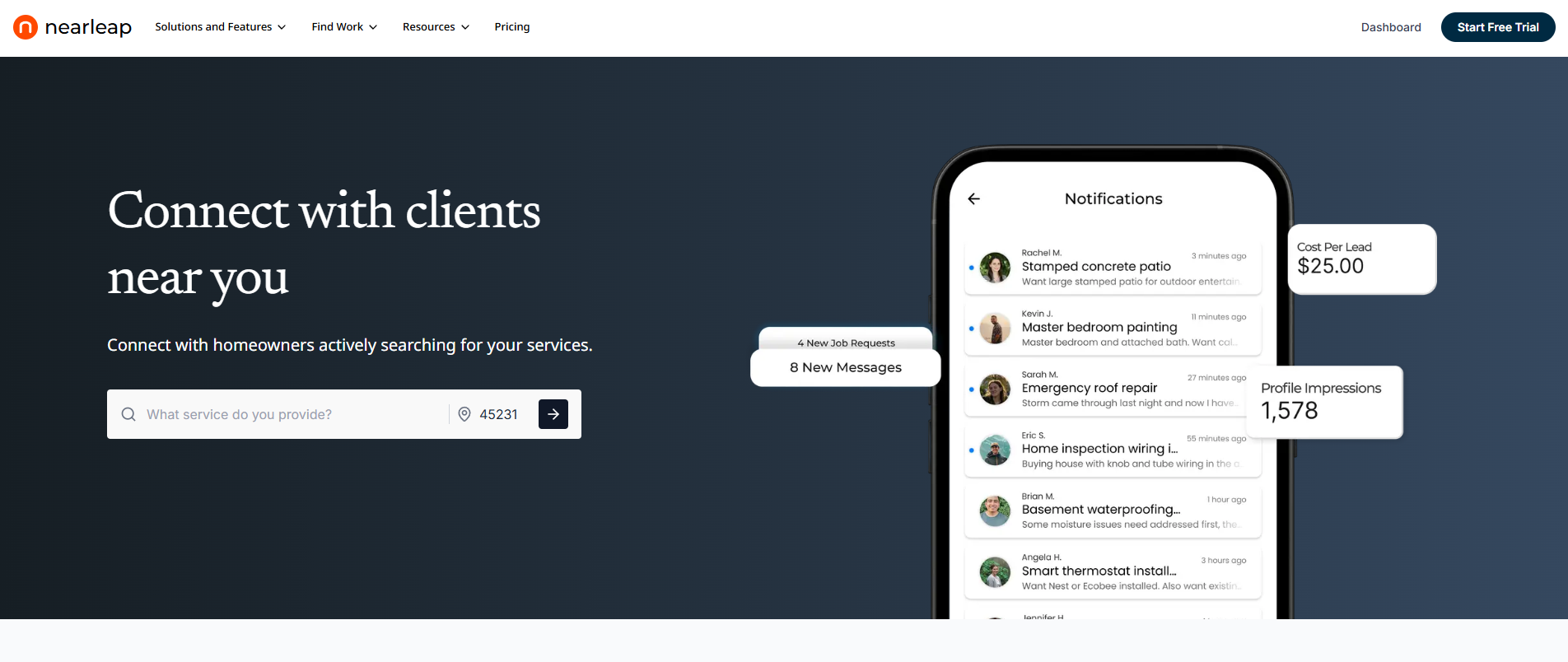
When you're looking for a website that reliably delivers paying customers for your trade, the quality of each lead matters more than the quantity. Nearleap focuses on this principle by sending dedicated, verified leads to one contractor per job, so you never compete with four other companies for the same customer. You can create a free profile and preview leads in your area before subscribing. No credit card required.
Every lead goes through phone verification via Twilio before it reaches you. This eliminates spam submissions, fake numbers, and the tire-kickers that waste hours of your week on other platforms.
What sets it apart for tradespeople:
- Free to start. Create a profile and preview leads in your market with zero commitment. No credit card needed.
- Dedicated leads only. Each customer request goes to one contractor. No bidding, no racing to respond before competitors, no sharing.
- Fixed monthly pricing. Pro plan at $99/mo includes 10 leads, $20 per additional lead, $20 per booking. Business at $249/mo and Enterprise at $499/mo include unlimited leads with zero per-lead charges.
- Built-in CRM with kanban pipeline. Track every lead from inquiry to completed job. Add notes, set pipeline stages, and manage your entire sales process without a separate tool.
- Instant booking page. Each contractor gets a public booking URL where customers can schedule consultations directly. Flat booking fees ($10-$20) replace bidding wars. This turns your Nearleap profile into a 24/7 booking engine.
- Lead preferences. Choose your service area, job types, and budget range. Decline leads that don't fit, and they become available for other contractors through the opportunity system.
- Auto-responses (Enterprise). Instant automated replies go out to new leads so customers hear from you within seconds, even when you're on a job site.
- Client profiles. The platform automatically builds a client database as you work leads, so you have a ready-made list for follow-up marketing and repeat business.
The 7-day free trial gives you access to the full platform with no credit card commitment upfront. For tradespeople tired of overpaying for shared leads on other platforms, Nearleap's dedicated model is a significant upgrade.
Pros:
- Free profile with lead previews before paying
- Unlimited lead plans available for scaling
- Leads are never shared with other contractors
- Phone-verified contacts reduce no-shows and fakes
- CRM, booking, and lead management in one platform
- Predictable monthly cost
Cons:
- Subscription required for full lead access (free preview available)
- Newer platform with growing coverage areas
- Enterprise features require higher-tier plan
#2. Thumbtack
Thumbtack is one of the most well-known platforms for finding trade customers. Homeowners submit project requests, and Thumbtack sends those leads to relevant contractors who pay per lead. Costs range from $15 for simple jobs to $100+ for large projects like roofing or remodeling.
The platform works well for generating quick volume, especially for handyman services, house cleaning, and smaller trade jobs. Response speed matters enormously here; contractors who reply within 5 minutes win significantly more jobs.
Pros:
- Large customer base with high lead volume
- No monthly commitment, pay only for leads
- Instant Booking feature for qualified pros
- Built-in review system helps build credibility
Cons:
- Leads are shared with up to 5 contractors
- Costs per lead have increased significantly in recent years
- Price-conscious customers who comparison shop heavily
- Cancellation rates can be high for some trades
#3. Google Local Services Ads
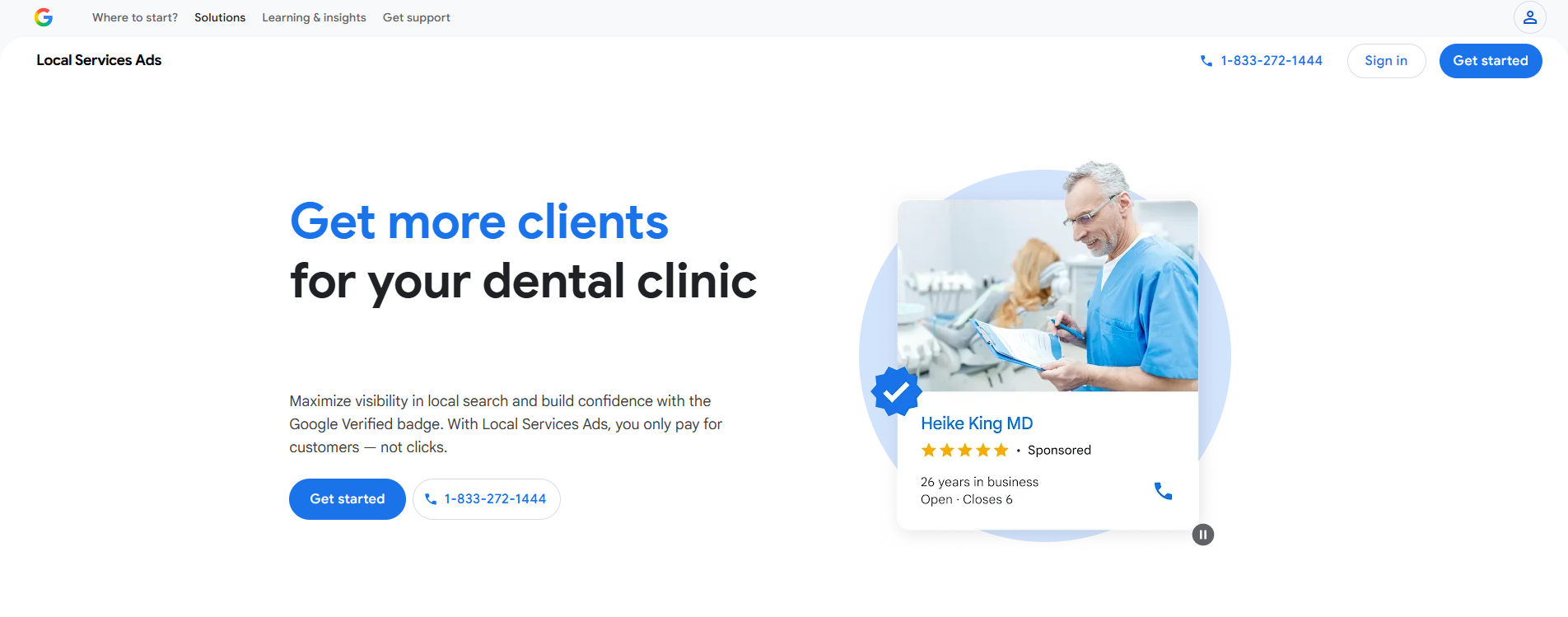
Google LSA places your business at the very top of search results when customers search for your trade in your area. The "Google Guaranteed" badge (or "Google Screened" for some professions) adds instant credibility that other ad types can't match.
You pay per lead, not per click, which means you only spend money when a customer actually contacts you. Lead costs vary widely: a locksmith lead might be $5-$15, while an HVAC installation lead could be $50-$100+.
Pros:
- Top placement in Google search results
- Google Guaranteed badge builds instant trust
- Pay per lead, not per click
- High-intent customers actively searching for services
Cons:
- Requires background check and license verification (2-4 weeks)
- Lead costs vary significantly by trade and market
- Limited control over when and how you appear
- Customer disputes can affect your ranking
#4. Angi (formerly Angie's List)
Angi has been connecting homeowners with service professionals for over two decades. The platform now operates on a per-lead model, with costs ranging from $15 for simple tasks to $300 for major projects like kitchen remodels or roof replacements.
Angi tends to attract homeowners with larger budgets and more complex projects, which can mean higher revenue per job. The platform's long history means many homeowners still go there first when searching for contractors.
Pros:
- Established brand with strong consumer trust
- Higher-budget customers on average
- Fixed-price project options available
- Detailed business profiles with reviews
Cons:
- Lead costs are among the highest in the industry
- Leads are shared with multiple contractors
- Aggressive upselling of advertising packages
- Customer expectations can be very high
#5. Bark
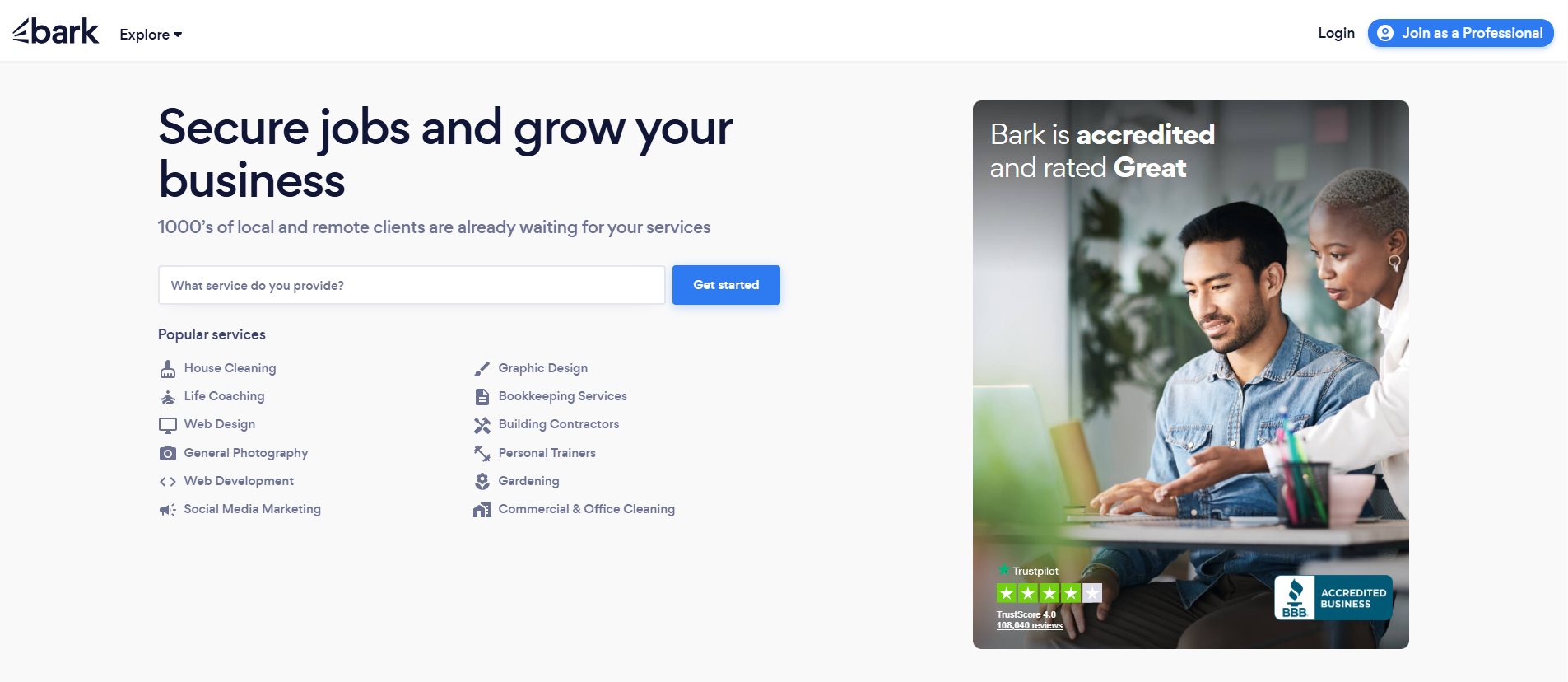
Bark operates in over 1,000 service categories across multiple countries. When a customer submits a request, Bark notifies relevant professionals who can then use credits to respond. Credits cost $1.50-$8+ each, depending on the category and project size.
The platform works best for trades that serve both residential and commercial customers. The credit-based model gives you control over spending, though costs can be unpredictable since different leads consume different amounts of credits.
Pros:
- Wide variety of service categories
- Credit-based model gives spending control
- International presence if you serve multiple markets
- Relatively affordable per lead for some categories
Cons:
- Leads are shared with 5 or more contractors
- Credit costs vary unpredictably
- Smaller customer base than Thumbtack or Angi in most US markets
- Customer quality varies significantly
#6. Yelp
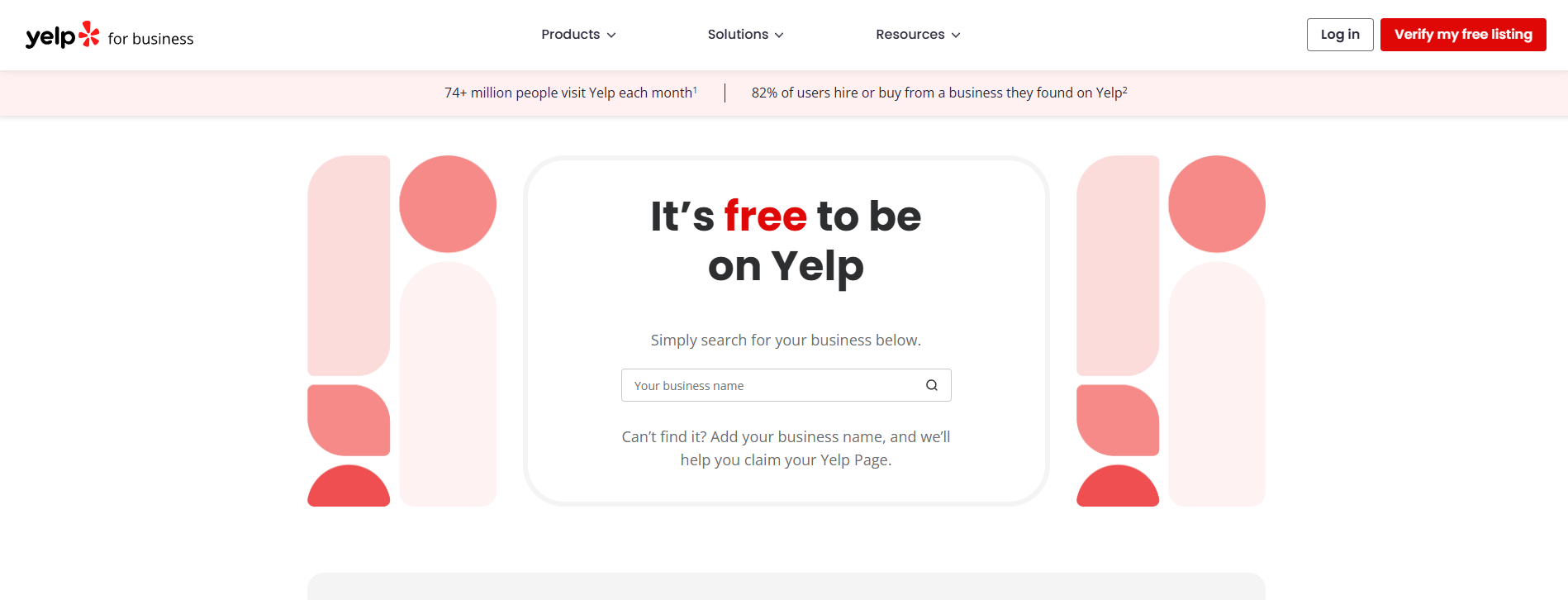
Yelp remains a dominant platform for local service discovery, especially in urban markets. A strong Yelp profile with positive reviews can generate consistent organic leads for free. Paid advertising starts at $5-$15/day and puts your business in front of customers searching for your trade.
The platform's review system is both its greatest strength and weakness. Yelp's review filter sometimes removes legitimate positive reviews, which frustrates many contractors. Still, customers trust Yelp ratings, and a 4.5+ star rating drives significant business.
Pros:
- Strong organic traffic in major metros
- Trusted review system that customers rely on
- Free basic listing with good visibility
- Request-a-Quote feature connects you with active buyers
Cons:
- Review filter can remove legitimate positive reviews
- Aggressive sales calls from Yelp ad reps
- Paid ads are expensive relative to results in some markets
- Negative reviews can disproportionately impact your business
#7. Nextdoor
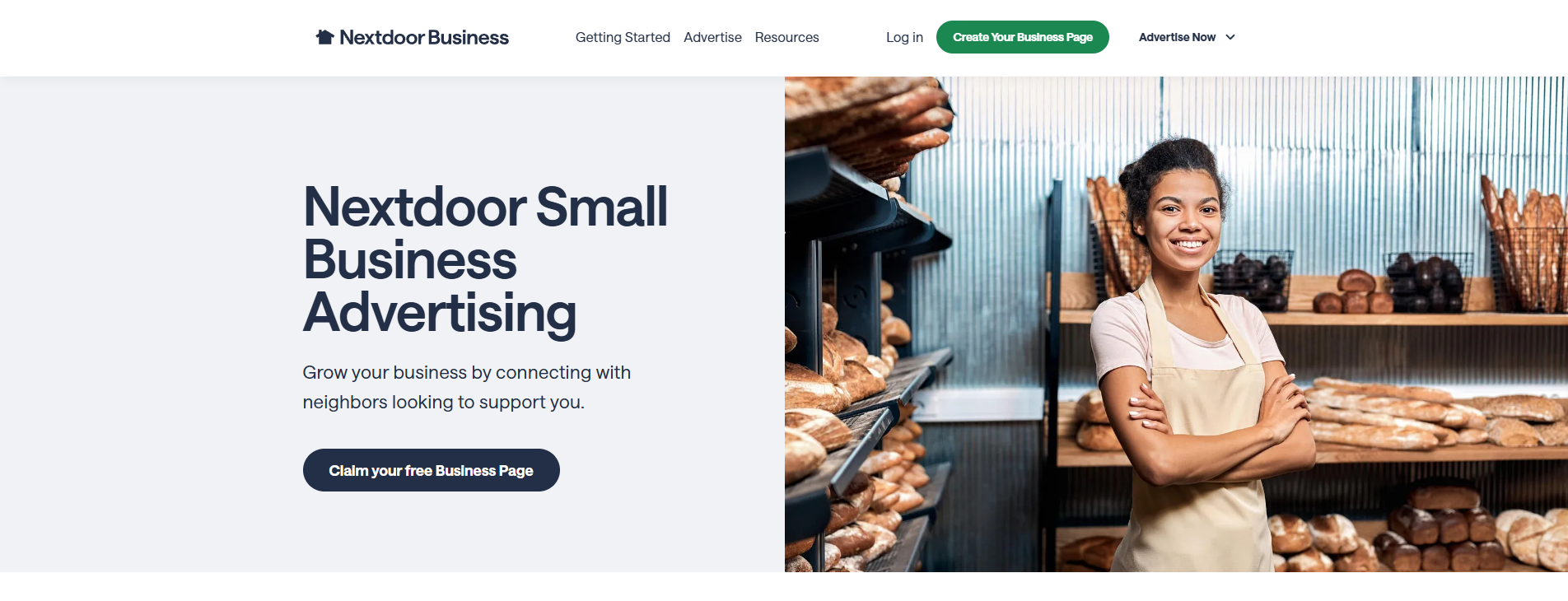
Nextdoor is the neighborhood social network, and it's become a powerful tool for tradespeople who serve residential customers. Homeowners regularly post asking for contractor recommendations, and being active in your local Nextdoor community builds trust organically.
A free business page lets you appear in local searches and receive recommendations from neighbors. Paid Local Deals start at $2/day and target homeowners within a specific radius of your service area.
Pros:
- High trust factor from neighborhood community
- Free business page with organic visibility
- Very affordable paid advertising
- Recommendations carry significant weight
Cons:
- Limited to residential customers
- Smaller audience than Google or Facebook
- Organic reach requires consistent engagement
- Not all neighborhoods are equally active
#8. Facebook Marketplace
Facebook Marketplace and local buy/sell groups have become surprisingly effective for finding trade customers. Many homeowners post requests for contractor recommendations in community groups, and Marketplace lets you list your services directly.
Facebook Ads targeting homeowners in your service area typically cost $5-$20 per lead for local service businesses. The platform's detailed targeting options let you reach specific demographics, neighborhoods, and even homeowners who recently moved.
Pros:
- Massive user base with local targeting
- Free organic opportunities in community groups
- Affordable paid advertising with precise targeting
- Direct messaging for quick customer communication
Cons:
- Not purpose-built for service businesses
- Leads can be lower quality than dedicated platforms
- Requires consistent social media presence
- Algorithm changes can affect visibility
#9. Houzz
Houzz is the go-to platform for homeowners planning renovations, remodels, and design projects. If your trade involves kitchens, bathrooms, additions, or custom builds, Houzz connects you with high-intent customers willing to spend on premium work.
Professional subscriptions range from $300 to $1,000+/month depending on your market. The platform's photo-centric design lets you showcase completed projects, which is perfect for visual trades like tiling, carpentry, and custom millwork.
Pros:
- High-intent customers with larger budgets
- Visual portfolio format showcases your best work
- Strong in remodeling and design categories
- Leads tend to convert at higher rates
Cons:
- Expensive subscription costs
- Limited to renovation and design trades
- Smaller audience than general platforms
- Best results require professional photography
#10. Porch
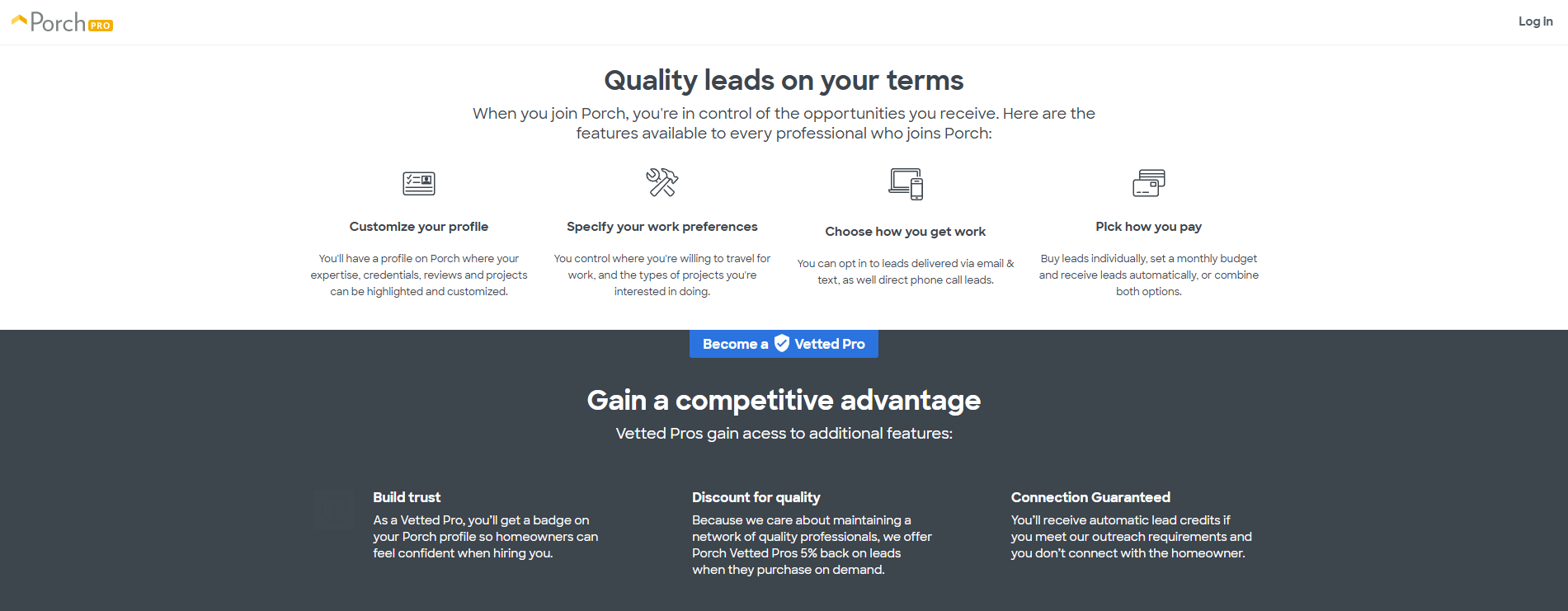
Porch connects homeowners with contractors, primarily through partnerships with home improvement retailers like Lowe's. When customers purchase materials or request installation services, Porch routes those leads to local contractors.
Lead costs range from $10 to $150 depending on project type, and leads are shared among multiple contractors. The platform works best for installation-related trades that complement retail purchases: flooring, windows, doors, and appliance installation.
Pros:
- Partnership with Lowe's drives customer volume
- Customers often have materials already purchased
- Moderate lead costs for installation services
- Project management tools included
Cons:
- Leads are shared with multiple contractors
- Best for installation trades, limited for others
- Customer expectations shaped by retail pricing
- Smaller independent presence than competitors
How We Ranked These
We evaluated each website based on four criteria: cost per customer acquired (not just cost per lead), lead dedication (whether leads go to one pro or are shared), ease of use for busy tradespeople, and track record of delivering paying customers in 2026.
Platforms that deliver dedicated leads ranked higher because shared leads typically convert at 10-20% the rate of dedicated ones, making the true cost per customer significantly higher. We also considered the setup time and ongoing effort required, since most tradespeople can't spend hours managing multiple platforms. Free entry points scored a bonus.
Pricing data reflects March 2026 rates and may vary by trade and metro area.
Frequently Asked Questions
Which website is best for finding customers in a specific trade?
It depends on your trade. For general contracting, plumbing, electrical, and HVAC, Nearleap (free to start) and Google LSA deliver the most consistent results. Nearleap's unlimited lead plans are ideal for scaling. For remodeling and design trades, Houzz is worth the investment. For handyman and cleaning services, Thumbtack generates quick volume. Most tradespeople see the best results by combining a dedicated lead platform (like Nearleap) with a strong Google Business Profile.
How many lead generation websites should I use at once?
Start with two: one paid platform for immediate leads and Google Business Profile for organic growth. Managing more than three platforms becomes counterproductive because your response time suffers. Slow responses kill your close rate, and close rate matters more than lead volume. Focus on responding within 5 minutes on the platforms you choose.
Are shared leads worth paying for?
Shared leads can work if the cost is low enough. The math is simple: if a shared lead costs $30 and you win 1 in 5 (typical for shared leads), your actual cost per customer is $150. If a dedicated lead costs $50 and you win 1 in 3, your cost per customer is $150. At those numbers, dedicated leads save you time even at a higher sticker price. Calculate your true cost per booked job, not just cost per lead.
How do I get customers online with no reviews?
Platforms like Nearleap (free to start) and Thumbtack don't require reviews to start receiving leads. While you build reviews, focus on response speed and professionalism in your quotes. After each job, ask for reviews on Google, as Google reviews carry the most weight across all platforms. Most contractors can accumulate 10-15 reviews in their first 2-3 months.
Related reading: